Martje Grohmann and the Shape of a Life in Motion
Because she’s not a star, Martje Grohmann intrigues me. Her limited public footprint shines in multiple directions. After movies and literature, she moves on to painting and homeopathy. Werner and Rudolph Herzog’s names move like bright planets around her, yet she is not a shadow. She has her own voice, storyline, and career.
The record’s rarity stands out. Scarcity seems planned, like an ice-covered river. Even through the ice, a pattern appears. Martje Grohmann was born in 1943 and seemingly lived through multiple seasons. She supported important films in her film career. Her literary years included books and authorship. Her later life seems to have focused on healing, art, and quieter creativity. The map has turns, pauses, and side pathways.
Early Life, Background, and the Public Trace
The public details about Martje Grohmann are limited, but they are enough to suggest a grounded, intellectually active life. She is associated with Germany, and one local profile places her birth in Albersdorf, Schleswig-Holstein. That detail matters because it gives the story a starting point that feels concrete, almost like the first stone in a path. She later appears connected to Munich, which suggests a move from a northern German origin into a wider cultural center.
I also notice how often her names vary in public references. Martje Grohmann appears alongside Martje Herzog-Grohmann, and both forms point back to the same woman. This kind of name variation often happens when a private life intersects with a public one. It can make a person harder to pin down, but it also hints at the layered way identity works across marriage, creative work, and later professional life.
Her public image is not built on interviews or self-promotion. It is assembled from fragments: film credits, book metadata, local notices, and mentions in later documentaries or retrospective pieces. That gives her a different kind of presence. She feels less like a celebrity and more like a person whose life touched several cultural rooms and then moved on before the doors could stay open.
Film Work and Creative Labor
Martje Grohmann’s film work is the clearest part of her public biography. She is credited as an assistant director on Lebenszeichen from 1967 and 1968. She is also connected to Aguirre, der Zorn Gottes in 1972. These are not minor titles in the history of German cinema. They sit near the center of a storm, with Herzog’s cinema often described as intense, demanding, and visually magnetic.
I think it matters that her name appears not just in a passive association with those films, but in roles that imply labor, coordination, and creative support. Assistant direction is the work of timing, pressure, and invisible structure. It is the scaffolding that lets the larger edifice stand. That kind of work does not always get the same applause as directing, but without it the machine stalls.
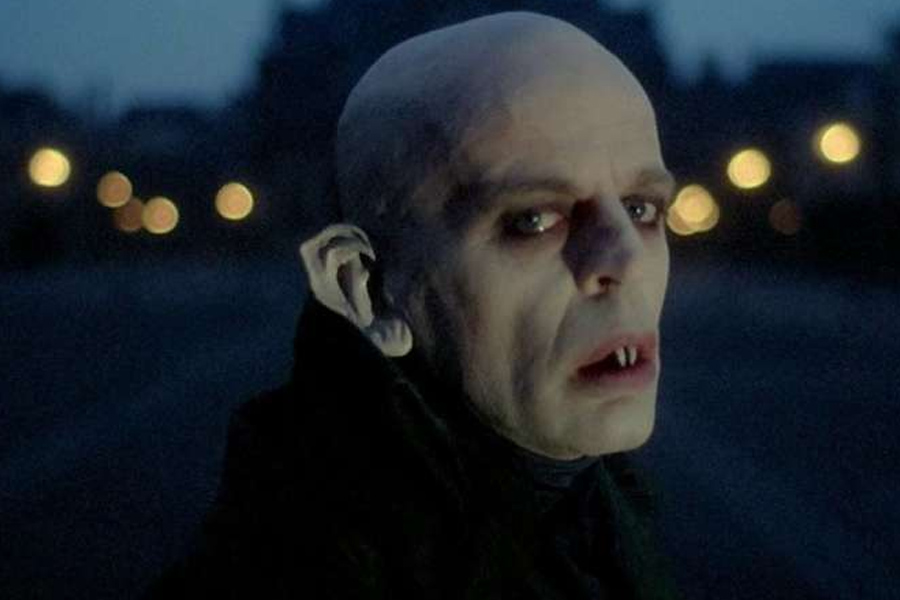
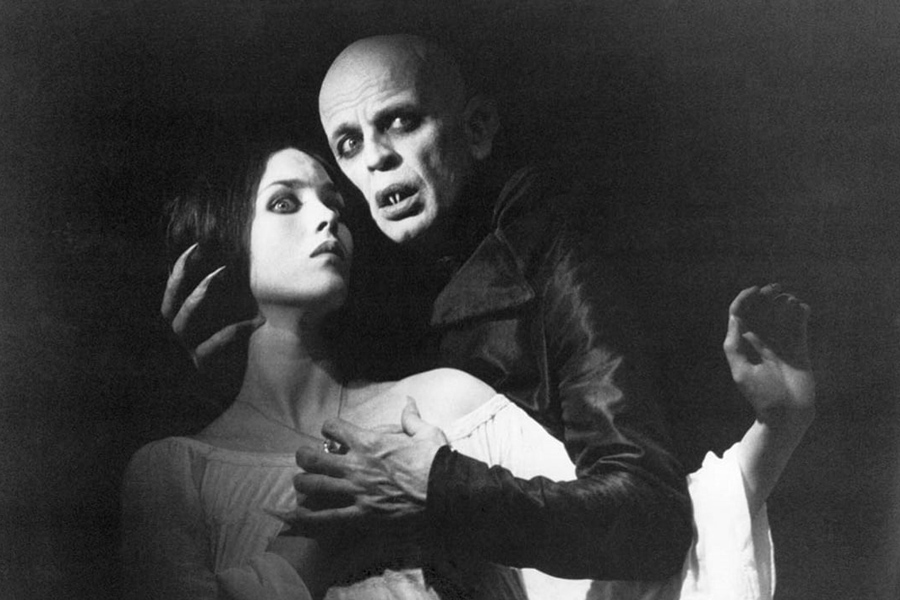
She is also listed in connection with Nosferatu – Phantom der Nacht in 1978, and as a co-author on Schwestern oder Die Balance des Glücks in 1979. That range suggests she was not confined to one type of contribution. She moved between practical production work, on-screen or cast presence, and writing. The pattern feels elastic rather than fixed.
A particularly notable part of her creative record is her connection to Lotte Eisner’s memoir Ich hatte einst ein schönes Vaterland: Memoiren, published in 1984. Martje Grohmann is identified in public records as a co-author and compiler there. That gives her a place in literary preservation as well as in film. It also shows a mind willing to shape memory into text, to turn lived material into a form that can outlast the room in which it began.
Writing, Healing, and Later Creative Life
As I move through the later references, Martje Grohmann starts to feel even more multidimensional. One local author profile describes her as a homeopath since 1992, and another public notice references her acrylic painting. Those later details suggest a life that did not narrow with age. Instead, it broadened into different forms of attention.
That shift makes sense to me. Some people begin in the noise of production and later migrate toward quieter work, where touch, color, and language become the main tools. In her case, writing, painting, and homeopathy all sit on the same shelf of careful observation. They require patience. They require a sensitivity to what is hidden beneath the obvious.
I also find it interesting that she is described as a writer of essays, poems, short stories, and film criticism in one of the local profiles. That list suggests a person comfortable with both analysis and invention. Essays look outward. Poems look inward. Short stories build small worlds. Film criticism stands between image and language like a translator at a border crossing. Martje Grohmann seems to have occupied all of those spaces at different points in her life.
Family Members and Personal Relationships
Her family is known for Werner and Rudolph Herzog. That is the visible familial constellation most often associated with her in public records.
Werner Herzog is the most famous relative. His first and subsequently ex-wife Martje Grohmann is a famous German filmmaker, writer, and director. Marriage in 1967, divorce in 1985. An eighteen-year marriage can influence an adult’s weather. When both people are creative, its length suggests a rich shared history.
I have evidence that Werner Herzog is more than a spouse in Martje Grohmann’s public narrative. Their bond is essential to her biography. Even when she focuses on her own work, the Herzog name lingers, like a thread through the fabric without fully defining it.
The couple’s 1973-born son is Rudolph Herzog. His work includes filmmaking and writing. This is significant because it demonstrates the creative lineage continuing. The son gets more than a famous surname. His realm includes storytelling and movies. That forms a triangle of artistic life: mother, father, and child, all related to narrative.
I cannot discover good public proof for extra children, and I do not wish to construct a broader family mythology. A meaningful image can be drawn from the documentation. Her public family identification is Martje Grohmann, Werner Herzog, and Rudolph Herzog.
A Timeline That Suggests Movement Rather Than Stasis
I like to read her life as a sequence of crossings. In 1943, she begins. By 1967 and 1968, she is already linked to film production work. In 1967, she marries Werner Herzog. In 1972, she is connected with Aguirre, der Zorn Gottes. In 1973, Rudolph Herzog is born. By 1978 and 1979, she appears in another film context and as a co-author. In 1984, her link to Lotte Eisner’s memoir is visible in print. In 1985, the marriage ends. By 1992, one profile places her in the field of homeopathy. By 2008, her painting is being publicly noted. In the 2020s, she resurfaces in documentary discussion and retrospective coverage.
That sequence feels less like a career ladder and more like a constellation. Different stars light up at different times. Some are bright for a moment. Some stay steady. Together they form a shape that can only be seen if I step back.
FAQ
Who is Martje Grohmann?
Martje Grohmann is a German writer, actress, and film worker whose public record also connects her to later creative and healing work. She is best known publicly as Werner Herzog’s former wife and Rudolph Herzog’s mother.
Was Martje Grohmann married to Werner Herzog?
Yes. Martje Grohmann married Werner Herzog in 1967, and the marriage ended in divorce in 1985. Their relationship is the most visible family tie in her public biography.
Who is Rudolph Herzog?
Rudolph Herzog is Martje Grohmann’s son. He was born in 1973 and is known as a filmmaker and writer. He continues the family’s strong connection to creative work.
What kind of work did Martje Grohmann do?
Her public credits connect her to assistant directing, writing, acting, and co-authoring. Later references also describe her as a homeopath, painter, and writer of essays, poems, and short stories.
Is there much public information about Martje Grohmann’s private life?
Not much. The public record is limited and focuses mainly on her film work, her marriage to Werner Herzog, her son Rudolph Herzog, and a few later artistic or professional mentions.