A woman shaped by family, duty, and reinvention
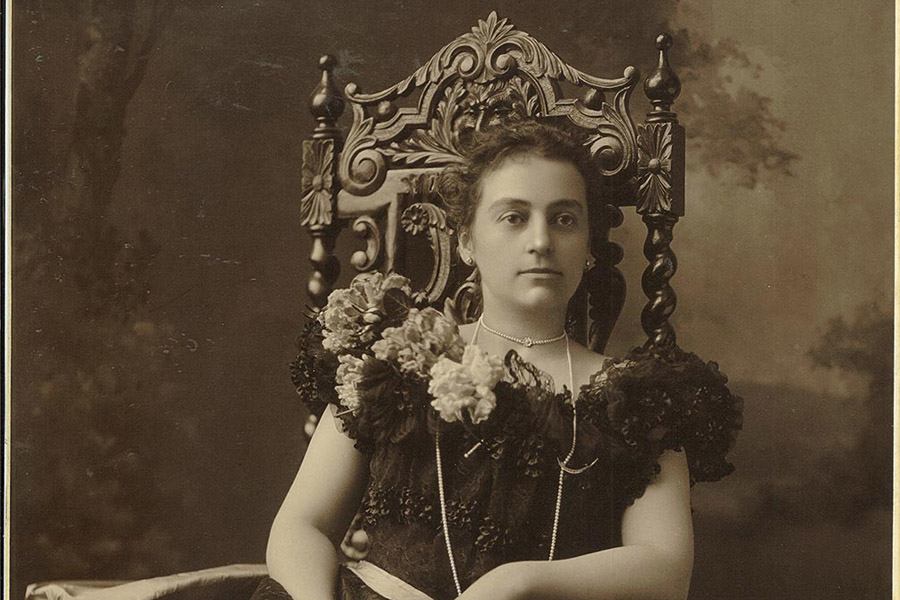
I find Mary Dimmick Harrison to be one of those historical figures who stands just outside the spotlight, yet leaves a long shadow. She was born on April 30, 1858, in Honesdale, Pennsylvania, as Mary Scott Lord. Her life moved across grief, privilege, public service, and family controversy with the steady force of a river cutting through stone.
Her father was Russell Farnham Lord, and her mother was Elizabeth Mayhew Scott. That maternal line mattered greatly, because it connected Mary to the Scott family and, through that branch, to Caroline Scott Harrison, the wife of Benjamin Harrison. In other words, Mary was not only part of a family story, she was part of a family web. Her grandparents on that side were John Witherspoon Scott and Mary Potts Neal. I see in that lineage the roots of a household that was both educated and socially connected, but also deeply tied to the public life of the late 19th century.
When Mary was nine, her father died. That loss changed the shape of her childhood. The family moved to Springfield, Illinois, and Mary continued her education there, later studying at a boarding school in Princeton, New Jersey, and for a year at a female college in Elmira, New York. That path suggests discipline and ambition. It also suggests mobility, both geographic and social, which would become a pattern in her life.
The Lord family and the early house she came from
Mary’s family included several siblings, and each one helps complete the outline of her household. Her siblings were Walter Scott Lord, Elizabeth Scott Lord Parker, Anna Y. Lord, and James Henry Lord. These names matter because they show Mary was not a solitary figure drifting through history. She came from a wider domestic world, one with its own loyalties, losses, and inherited expectations.
Her mother, Elizabeth Mayhew Scott, gave Mary the most important family bridge of all, the one that linked her to Caroline Harrison. Caroline was Mary’s aunt, and that relationship placed Mary near the center of a future presidential story long before she ever married Benjamin Harrison. This was a family tree with branches that reached into the White House, and Mary became one of the limbs that bent under the weight of history.
I think it is important to say that Mary did not simply inherit connections. She moved through them with care. She was young, observant, and close enough to power to understand its manners, but not so close as to lose her own identity.
First marriage, widowhood, and a life interrupted
On October 22, 1881, Mary married Walter Erskine Dimmick. That marriage was brief. Walter died in January 1882, leaving Mary widowed in her early twenties. This was a hard beginning to adult life, and it gave her an early acquaintance with loss. Many lives at the time were marked by sudden death, but hers seems especially compressed, as though one chapter closed before it had fully opened.
After Walter’s death, she eventually reentered the orbit of the Harrison household. Her aunt, Caroline Harrison, had become First Lady when Benjamin Harrison served as president. Mary assisted Caroline in Washington, D.C., and from that point her personal story and the national story began to overlap. I picture her in rooms where politics and family were inseparable, where the work of hosting, managing, and smoothing social edges was not trivial at all, but essential.
When Caroline died in 1892, the emotional center of the Harrison family changed. Mary and Benjamin Harrison corresponded frequently afterward, and their relationship deepened. On April 6, 1896, they married in New York City. He was a former president, older and widowed. She was younger, connected by blood and memory to his first marriage, and suddenly became his wife. It was a marriage that stirred strong reaction within the family, because affection and propriety did not always march in step.
Benjamin Harrison and the family circle around him
Mary joined one of America’s most famous presidential families when Benjamin Harrison became her second husband. Mary’s aunt Caroline Scott Harrison married Benjamin first. Benjamin and Caroline had Russell Benjamin Harrison and Mary Scott Harrison McKee. Mary married Benjamin and had two stepchildren.
Russell Benjamin Harrison was famous and a family man. Mary Scott Harrison McKee was another important Harrison family figure. Their presence reminds me that Mary entered a household formed by memory, rank, and expectation.
Mary and Benjamin had one child, Elizabeth Harrison Walker, on February 21, 1897. Elizabeth gained fame. Her career included law, publishing, and finance writing for women. Mary’s life reveals that her household line was not ornamental or ceremonial. It continued in school and work.
Mary’s grandchildren continued the tale. Benjamin Harrison Walker and Mary Jane Walker, later Jane Harrison Walker Garfield, continued the line. Jane’s marriage to Newell Garfield connected the Harrison and Garfield families, establishing a historical braid. It’s beautiful and odd, like family history crossing tributaries.
Work, public life, and preservation
Mary had an unconventional job. She had no title or ladder-based profession. She worked in service, social organization, preservation, and public memory. In the White House and Harrison household, she handled letters and social tasks. Later, she became Benjamin Harrison’s legacy keeper.
Mary continued public life after Benjamin Harrison’s 1901 death. She preserved his archives, honored him, and supported his historical efforts. She also ordered the Tiffany memorial stained glass window Angel of the Resurrection as a monument. That choice suits me. Like burning a candle in a cathedral, it is intimate and majestic.
She was organizationally involved. She ran the New York War Camp Community Service entertainment bureau during WWI. She then became Republican women’s Committee of One Hundred treasurer for over 25 years. These functions may seem administrative, yet they reveal influence architecture. Mary helped develop public culture’s scaffolding.
Financial position and public recognition
Mary’s financial life appears in the record mostly through public measures rather than private accounts. She received a franking privilege in 1909, a practical postal benefit. Later, a pension issue brought her circumstances into public discussion. These details show that even former first families could face uncertainty. Prestige was not always the same thing as security.
What stands out to me is not wealth, but endurance. Mary’s life moved through widowhood, remarriage, motherhood, public memory, and social responsibility. She was not frozen in one role. She adapted. She made a life from relationships, and then made those relationships matter historically.
Mary Dimmick Harrison and the people closest to her
If I trace the family members around Mary, the picture becomes clearer.
Her parents were Russell Farnham Lord and Elizabeth Mayhew Scott.
Her maternal grandparents were John Witherspoon Scott and Mary Potts Neal.
Her siblings included Walter Scott Lord, Elizabeth Scott Lord Parker, Anna Y. Lord, and James Henry Lord.
Her first husband was Walter Erskine Dimmick.
Her aunt was Caroline Scott Harrison.
Her second husband was Benjamin Harrison.
Her stepchildren were Russell Benjamin Harrison and Mary Scott Harrison McKee.
Her daughter with Benjamin was Elizabeth Harrison Walker.
Her grandchildren included Benjamin Harrison Walker and Jane Harrison Walker Garfield.
That list may look orderly on the page, but in life these were not just names. They were rooms, letters, funerals, weddings, children, and complicated loyalties. Family history is often less like a straight road and more like a house with many doors. Mary moved through nearly all of them.
Legacy in memory, paper, and stone
Mary died on January 5, 1948, in New York City. She is buried in the Harrison family plot at Crown Hill Cemetery in Indianapolis. That resting place feels appropriate. Her life began in one kind of obscurity and ended in a family monument shaped by public remembrance.
She remains important because she connected personal life to presidential memory. She was niece, wife, widow, mother, stepmother, and keeper of papers. She lived where private feeling and public history met, sometimes awkwardly, sometimes elegantly, often both at once.
FAQ
Who was Mary Dimmick Harrison?
Mary Dimmick Harrison was a woman born in 1858 who became the second wife of former President Benjamin Harrison. She was also the niece of Benjamin Harrison’s first wife, Caroline Scott Harrison, which placed her close to the Harrison family long before her marriage.
Who were Mary Dimmick Harrison’s parents and grandparents?
Her parents were Russell Farnham Lord and Elizabeth Mayhew Scott. Her maternal grandparents were John Witherspoon Scott and Mary Potts Neal.
How many times was Mary Dimmick Harrison married?
She was married twice. Her first husband was Walter Erskine Dimmick, and after his death she married Benjamin Harrison in 1896.
Did Mary Dimmick Harrison have children?
Yes. She had one daughter with Benjamin Harrison, Elizabeth Harrison Walker.
Who were Mary Dimmick Harrison’s closest family members in the Harrison line?
Her aunt was Caroline Scott Harrison. Her husband was Benjamin Harrison. Her stepchildren were Russell Benjamin Harrison and Mary Scott Harrison McKee. Her grandchildren included Benjamin Harrison Walker and Jane Harrison Walker Garfield.
What is Mary Dimmick Harrison best remembered for?
She is best remembered for her marriage to Benjamin Harrison, her role within the Harrison family, her work preserving his papers and memory, and her public and organizational service after his death.