A woman at the center of three worlds
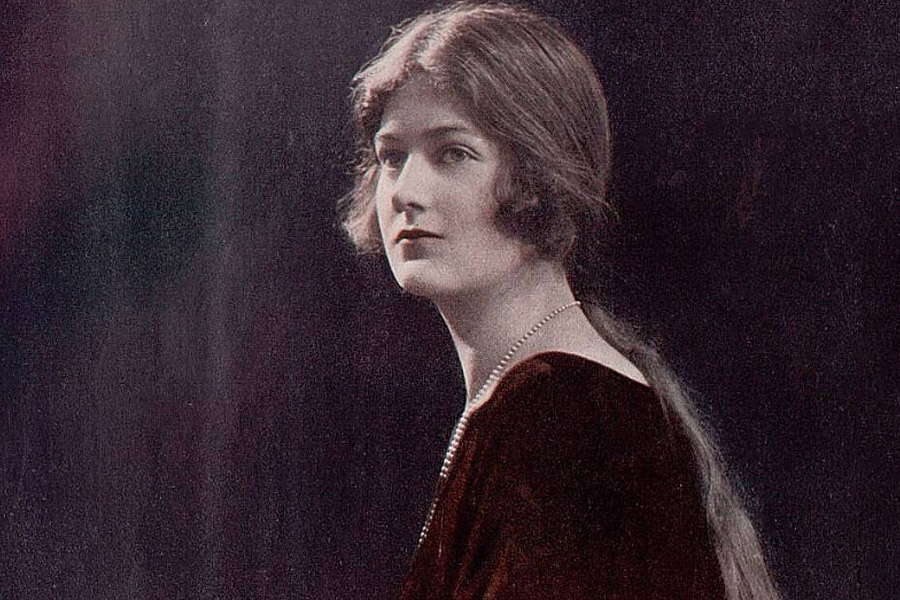
I think of Joan Yarde-buller as someone who moved through high society like a candle in a drafty hall, steady, bright, and impossible to ignore. Born Joan Barbara Yarde-Buller on 22 April 1908, she lived from the Edwardian age into the late 20th century and left behind a family tree that branches across British aristocracy, the Aga Khan line, and the wider world of wealth, diplomacy, and public life.
She was not a conventional career figure in the modern sense. Her life was shaped by marriages, motherhood, salons, charity work, and social influence. Yet that description can sound smaller than it really was. In her case, social influence was a kind of power. She helped shape circles, connected people, and occupied a space where politics, philanthropy, and prestige often met over dinner tables and country houses.
Her early life and aristocratic background
Joan was the daughter of John Reginald Lopes Yarde-Buller, the 3rd Baron Churston, and Jessie Smither, better known by her stage name Denise Orme. That alone tells a story of contrast. Her father belonged to the hereditary peerage and the world of duty, title, and estate. Her mother came from the stage, from performance, music, and public charm. Joan inherited both the polish of the aristocracy and the theatrical instinct for presence.
She grew up as the eldest of six children. That position often matters, and in Joan’s case it seems to have helped define her. Eldest children are frequently expected to carry the atmosphere of a family, and Joan seems to have done exactly that. She was the visible face of the line, the one whose marriages and children would later stitch her name into multiple dynasties.
Her siblings were Richard Francis Roger Yarde-Buller, who became the 4th Baron Churston, Hon. John Reginald Henry Yarde-Buller, Denise Margaret Yarde-Buller, Lydia Yarde-Buller, and Primrose Yarde-Buller. Their marriages linked the family to the Ebury, Bedford, and Cadogan titles, which meant Joan’s family was already deeply woven into the fabric of British upper society before her own adult life took shape.
A first marriage into the Guinness family
In 1927, at the age of 19, Joan married Thomas Loel Evelyn Bulkeley Guinness, usually known as Loel Guinness. He came from the famous Guinness brewing family and moved in political and aviation circles. This marriage placed Joan in another bright and expensive orbit, where wealth, status, and public attention gathered like swans on a lake.
Together they had one child, Patrick Benjamin Guinness. His life became part of Joan’s family story in a direct and durable way, even though the marriage itself did not last. The union ended in divorce in 1936, a year that marked a sharp turning point. Divorce in that era still carried social weight, and Joan’s path after it was anything but ordinary.
Marriage to Prince Aly Khan and a change of life
Soon after her divorce, Joan married Prince Aly Khan in Paris in 1936. Before marrying, she converted to Islam and became Taj-ud-dawlah, Crown of the Realm. Not just a spouse change. The world changed.
Joan joined one of the most prominent Muslim dynasties of the 20th century through Aly Khan, Aga Khan III’s eldest son. Their marriage combined elegance, religion, worldwide prestige, and dynasty. It also had two internationally notable sons.
Prince Karim al-Hussaini, later Aga Khan IV, was their first son. Their second son was Prince Amyn Muhammad Aga Khan. Joan’s history is shaped by these two names. She was the mother of the Aga Khan IV, a global philanthropist, developer, and leader.
In 1949, Joan divorced Aly Khan. The wedding was already a public story by then. Her life changed from British aristocracy to the Ismaili and global Aga Khan family, and it never returned to its simpler roots.
Her third marriage and later life
In 1986, Joan married Seymour Berry, 2nd Viscount Camrose. He was a newspaper magnate and a long time friend before becoming her husband. This final marriage brought her into yet another realm, the world of publishing, press influence, and country house life.
Together they lived at Hackwood Park in Hampshire. Joan’s later years there were marked by practical stewardship as much as by status. She researched the original plans for the estate, transformed the woods and grounds, and helped supervise its opening to the public. That detail matters because it shows her as more than a hostess or a name in a pedigree. She was active, observant, and capable of shaping a place with her own hands and judgment.
Seymour Berry died in 1995, and Joan became Dowager Viscountess Camrose. She died in 1997 at the age of 89.
Joan Yarde-buller and the family web around her
Her family is a large and interlocking constellation, and I find that useful to lay out clearly.
| Family member | Relationship to Joan | Notes |
|---|---|---|
| John Reginald Lopes Yarde-Buller | Father | 3rd Baron Churston |
| Jessie Smither, Denise Orme | Mother | Singer, actress, musician |
| Richard Francis Roger Yarde-Buller | Brother | 4th Baron Churston |
| Hon. John Reginald Henry Yarde-Buller | Brother | Soldier |
| Denise Margaret Yarde-Buller | Sister | Married Robert Grosvenor, 5th Baron Ebury |
| Lydia Yarde-Buller | Sister | Married Ian Russell, 13th Duke of Bedford |
| Primrose Yarde-Buller | Sister | Married William Cadogan, 7th Earl Cadogan |
| Thomas Loel Evelyn Bulkeley Guinness | First husband | Loel Guinness |
| Patrick Benjamin Guinness | Son | Child from first marriage |
| Prince Aly Khan | Second husband | Son of Aga Khan III |
| Prince Karim al-Hussaini | Son | Aga Khan IV |
| Prince Amyn Muhammad Aga Khan | Son | Younger son |
| Seymour Berry | Third husband | 2nd Viscount Camrose |
Beyond that immediate circle, Joan’s descendants spread widely. Patrick Benjamin Guinness became the father of Maria Alexandra Guinness, Loel Patrick Guinness, and Victoria Christina Niarchos. Through Aga Khan IV came Princess Zahra Aga Khan, Prince Rahim Aga Khan, Prince Hussain Aga Khan, and Prince Aly Muhammad Aga Khan. That means Joan stands at a junction where old European aristocracy meets modern global royalty.
Her family life therefore resembles a river delta. One source feeds many channels, and the branches keep moving long after the main current has passed.
Career, public role, and achievements
Joan had a meaningful public life but no standard employment. She worked in hospitals and nursing during the war. Aga Khan III appointed her East African health and education commissioner in 1944. That position implies trust, responsibility, and community service.
She stayed active in the Ismaili society and later managed Hackwood Park. These actions were not symbolic. Organization, continuity, and detail are evident. Joan and other social historians worked in unofficial yet powerful locations. People who made things happen shaped institutions.
Her successes are better understood as a pattern, not a job designation. She connected families, cultures, and generations. Born with a title, she added another through marriage and a third later. She navigated each step with a well tuned social savvy.
The people who made up her closest legacy
The most important thing about Joan Yarde-buller is that she was never just one person in isolation. She was a daughter of Lord Churston and Denise Orme. She was the wife of Loel Guinness, Aly Khan, and Seymour Berry. She was the mother of Patrick Benjamin Guinness, Aga Khan IV, and Prince Amyn Aga Khan. She was the grandmother and great grandmother of a line that continued into figures such as Rahim Aga Khan, Hussain Aga Khan, Aly Muhammad Aga Khan, Victoria Niarchos, and Aga Khan V.
That is a family map with many doors. Joan stood near the center of all of them.
FAQ
Who was Joan Yarde-buller?
Joan Yarde-buller was an English socialite, aristocrat, mother, and later Viscountess Camrose. She is also remembered as Princess Aly Khan and as the mother of Aga Khan IV.
Who were Joan Yarde-buller’s parents?
Her father was John Reginald Lopes Yarde-Buller, 3rd Baron Churston. Her mother was Jessie Smither, better known as Denise Orme.
How many children did Joan Yarde-buller have?
She had three children. Her son Patrick Benjamin Guinness was from her first marriage. Her sons Prince Karim al-Hussaini, later Aga Khan IV, and Prince Amyn Muhammad Aga Khan were from her marriage to Prince Aly Khan.
Who were Joan Yarde-buller’s husbands?
She married three times. Her husbands were Loel Guinness, Prince Aly Khan, and Seymour Berry, 2nd Viscount Camrose.
What was Joan Yarde-buller known for besides marriage and family?
She was known for her social influence, wartime hospital and nursing involvement, her appointment as health and education commissioner in East Africa in 1944, her continuing role in the Ismaili community, and her later stewardship of Hackwood Park.
Which famous descendants came from Joan Yarde-buller?
Her descendants include Aga Khan IV, Aga Khan V, Prince Rahim Aga Khan, Prince Hussain Aga Khan, Prince Aly Muhammad Aga Khan, Victoria Christina Niarchos, and members of the Guinness family line.
What made Joan Yarde-buller unusual in her era?
She moved across several elite worlds at once. British peerage, brewing wealth, newspaper power, and the Aga Khan dynasty all intersected in her life. That combination gave her biography a rare density, like a jewel with many cut surfaces.