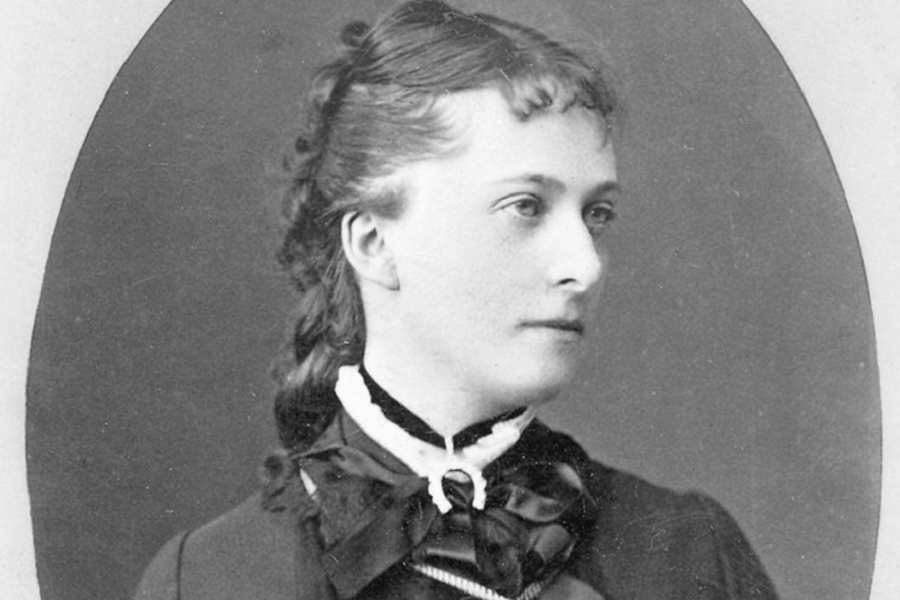
A princess shaped by scandal, devotion, and survival
In palace corridors, Catherine Dolgorukova seems like a flickering, frail, and unavoidable historical figure. She was born in Moscow in 1847 into an aristocratic family with a historic name but little money. The woman who captured Alexander II of Russia, then his secret love, then his wife, then a widow left to manage memory, children, and reputation changed her name several times, but her story stayed the same.
Her natal name connected her to Russia’s historic princely Dolgorukov family. Vera Gavrilovna Vishnevskaya was her mother and Prince Mikhail Mikhailovich Dolgorukov her father. Princess Marie Mikhailovna Dolgorukova, one of her younger sisters, became Countess von Berg. Because Catherine was poor and politically powerless, her small family mattered. She came from an uneasy lineage.
It seems that strain impacted her life. She attended Smolny Institute in St. Petersburg, which polished noble girls into women. However, history rarely retains trained women in their roles. Catherine met Alexander II young and became closer until it became her lifelong romance. Court protocol, controversy, and intimate love shaped their relationship.
The Dolgorukov family and the people around her
Catherine’s family is essential to understanding her story, because her life was never only her own. Every major turn in her biography touches a relative, a spouse, a child, or a descendant.
Her father, Prince Mikhail Mikhailovich Dolgorukov, belonged to the Russian nobility, but the family finances were not strong. After his death in 1865, Catherine’s circumstances became more precarious. His death mattered not just emotionally but materially, because it left the family more dependent on patronage and imperial favor.
Her mother, Vera Gavrilovna Vishnevskaya, appears as a stabilizing figure in the family narrative. She survived long enough to see her daughter become linked to the emperor himself, a development that must have felt both astonishing and unsettling. Mothers in aristocratic families often moved in the background of history, yet I cannot help seeing Vera as someone forced to navigate between propriety, survival, and ambition.
Her sister, Marie Mikhailovna Dolgorukova, is the quieter figure in the family tree, but she matters because she shows that Catherine was not an isolated heroine. She had a sibling, a mirror, a companion from the same narrowed world of old rank and reduced means. Marie later married into the Berg line, becoming Countess von Berg, and that marriage extended the family web into another aristocratic circle.
Then there was Alexander II of Russia, Catherine’s husband, protector, and the force around which her adult life revolved. He was not merely a royal romance. He was the ruler of an empire, a man already burdened by statecraft and domestic tragedy. Their relationship began as a clandestine attachment and ended with marriage in 1880, a morganatic union that allowed Catherine to become Princess Yurievskaya without giving her or her children a claim to the throne. That distinction is crucial. It gave her status but not succession. It crowned her, but it did not open the imperial door.
Together they had four children, and those children became the living continuation of Catherine’s story.
George Alexandrovich Yuryevsky was born in 1872. He was the first child, and his birth was perilous enough to nearly cost Catherine her life. He later studied in France, served in the navy, and married Countess Alexandra von Zarnekau in 1900. Their son, Alexander Georgievich Yuryevsky, carried the line forward.
Olga Alexandrovna Yurievskaya was born in 1873. She married Count George-Nicholas von Merenberg in 1895 and had three children, including Alexander Adolf, George Michael, and Olga Ekaterina Adda. Olga’s life shows how the Yurievsky branch spread into European noble families, no longer centered only on Russia.
Boris Alexandrovich Yurievsky was born in 1876 and died in infancy. His brief life matters because it reminds me how often royal history is measured not only by what survives, but by what vanishes before it can speak.
Catherine Alexandrovna Yurievskaya was born in 1878 and lived until 1959. She married first Prince Alexander Vladimirovich Baryatinsky and later Prince Sergei Platonovich Obolensky. She had two sons by the first marriage, Andrei and Alexander Baryatinsky. She later became a singer and author, which makes her one of the most visibly independent descendants in the family.
Catherine as a woman between palace and exile
Catherine appeared as a courtly shadow and was exiled. The adjustment from companion to widow after Alexander II’s death in 1881 was harsh. She was financially supported and given dignity, but exile can make dignity feel like a porcelain vase on a battlefield.
Her big pension allowed her to reside in the Little Marble Palace. Later, she became famous in France among aristocrats and expatriates. She hosted, sang, wrote, and lived a beautiful, expensive life there. I imagine her carrying Russia in memory, not passport. Her home was a platform for imperial echoes and survival.
She had an odd and revealing later career. After publishing a memoir under a pseudonym in 1882, she became a professional vocalist. The change matters. This woman was not happy to be a relic of a lost court. She changed shapes, used language, music, and memory to remake herself.
Money, legacy, and the cost of survival
Finances were never a minor detail in Catherine’s life. They ran beneath it like water under thin ice. Her family began with noble status but limited wealth. After Alexander II’s death, her finances depended on imperial arrangements and later on the sale of property. She lived in style, but style is expensive, and exile is often more expensive than comfort at home.
Her legacy is partly material and partly literary. The correspondence between her and Alexander II, preserved through letters, became one of the great intimate archives of the Romanov world. Their story survives not only in political history but in the emotional residue of thousands of written pages. That gives Catherine a place in history that is larger than scandal. She is part of the archive of feeling.
Extended family lines and descendants
Catherine’s children multiplied her presence across Europe. George carried the Yurievsky name forward. Olga connected the family to the von Merenbergs. Catherine, the youngest daughter, joined the Baryatinsky and Obolensky lines. Through these branches came grandchildren such as Prince Andrei Baryatinsky, Prince Alexander Baryatinsky, Prince Alexander Georgievich Yuryevsky, Count Alexander Adolf von Merenberg, Count George Michael von Merenberg, and Countess Olga Ekaterina Adda von Merenberg.
This matters because Catherine was not only a companion to a tsar. She became the root of a new dynastic offshoot. Her descendants moved through Russia, Germany, France, and England, carrying a name that began as a private scandal and became a lasting family marker.
FAQ
Who was Catherine Dolgorukova?
Catherine Dolgorukova was a Russian noblewoman who became the long time companion and later morganatic wife of Alexander II of Russia. She was born in 1847 and died in 1922. Her life linked court scandal, marriage, motherhood, exile, and reinvention.
Who were Catherine Dolgorukova’s parents?
Her father was Prince Mikhail Mikhailovich Dolgorukov. Her mother was Vera Gavrilovna Vishnevskaya. She also had one younger sister, Princess Marie Mikhailovna Dolgorukova, later Countess von Berg.
Who was Catherine Dolgorukova’s husband?
Her husband was Alexander II of Russia. Their marriage took place secretly in 1880, after many years of closeness and after the death of Alexander’s first wife, Empress Maria Alexandrovna.
How many children did she have?
She had four children with Alexander II. They were George Alexandrovich Yuryevsky, Olga Alexandrovna Yurievskaya, Boris Alexandrovich Yurievsky, and Catherine Alexandrovna Yurievskaya.
What happened to her children?
George became a family line bearer and married Countess Alexandra von Zarnekau. Olga married Count George-Nicholas von Merenberg and had three children. Boris died in infancy. Catherine married twice, first into the Baryatinsky family and later into the Obolensky family.
Did Catherine Dolgorukova have a career?
Yes, though not in the modern sense of an office holder or politician. She was a court figure, memoirist, later a singer, and a social hostess in exile. She also helped preserve the intimate written legacy of her life with Alexander II.
Why is she remembered today?
She is remembered because her life was both personal and political. She stood at the center of a royal love story, a secret marriage, an imperial household, and a family line that spread across Europe. Her biography feels like a mirror that reflects both glitter and fracture.